

Luxury watch and jewelry brands face a unique challenge: communicating exclusivity at scale without diluting brand equity. Most marketing executives understand email's revenue potential, but generic campaigns actively harm the premium positioning their brands have spent decades building. When executed with precision, personalized and lifecycle-driven email marketing becomes the difference between sustainable growth and eroding margins.
Table of Contents
- The Critical Role of Personalized, Lifecycle-Driven Email Marketing
- Why Personalization Matters More in Luxury Than in Mass Market
- Common Misconceptions About Email Marketing in Luxury Sectors
- Synergy Between Paid Advertising and Email Marketing for Sustainable Growth
- Applying Email Marketing Strategies to Luxury Watch and Jewelry Brands
- Discover Horologikal's Luxury Email Marketing Solutions
- Frequently Asked Questions About Email Marketing for Luxury Brands
Key Takeaways
| Point | Details |
|---|---|
| Revenue Impact | Personalized lifecycle emails increase luxury brand revenue 5-15% while protecting brand equity. |
| Open Rate Advantage | Subject line personalization achieves 50% higher open rates among luxury consumers compared to generic approaches. |
| Brand Protection | Batch-and-blast tactics damage customer lifetime value and undermine the exclusivity luxury buyers expect. |
| Channel Integration | Coordinating paid media with email marketing stabilizes revenue growth and improves overall ROI. |
| Mobile Priority | Luxury consumers engage primarily on mobile devices, requiring brand-aligned responsive design. |
The Critical Role of Personalized, Lifecycle-Driven Email Marketing
The data supporting personalized email marketing in luxury segments is compelling. Personalized email marketing in luxury jewelry can increase revenue between 5% and 15%, and boost marketing ROI by 10% to 30%. These numbers reflect a fundamental truth: high-value purchase decisions require nurturing, not interruption.
Lifecycle campaigns operate differently than traditional batch emails. They respond to customer behavior, purchase history, and expressed preferences. A collector browsing vintage Rolex models receives different content than a first-time buyer exploring entry-level luxury pieces. This behavioral segmentation respects the customer's journey while advancing your commercial objectives.
Consider the mechanics of lifecycle email performance:
- Welcome sequences that establish brand heritage and craftsmanship immediately after opt-in
- Browse abandonment flows triggered by specific product interactions, not generic cart reminders
- Post-purchase education that deepens product appreciation and builds repeat purchase intent
- VIP reactivation campaigns offering private viewings or early access to new collections
- Anniversary reminders acknowledging previous purchases with personalized recommendations
Batch-and-blast emails fail in luxury contexts because they treat all recipients identically. A customer who purchased a $15,000 watch three months ago has different needs than someone who subscribed to your newsletter yesterday. Generic promotional emails ignore this reality, reducing engagement and training your audience to ignore your messages.
Pro Tip: Map every customer touchpoint to a specific lifecycle stage, then build email flows that match the information needs and purchase readiness of each stage. Most luxury brands focus exclusively on acquisition, neglecting the substantial revenue sitting in their existing customer base.
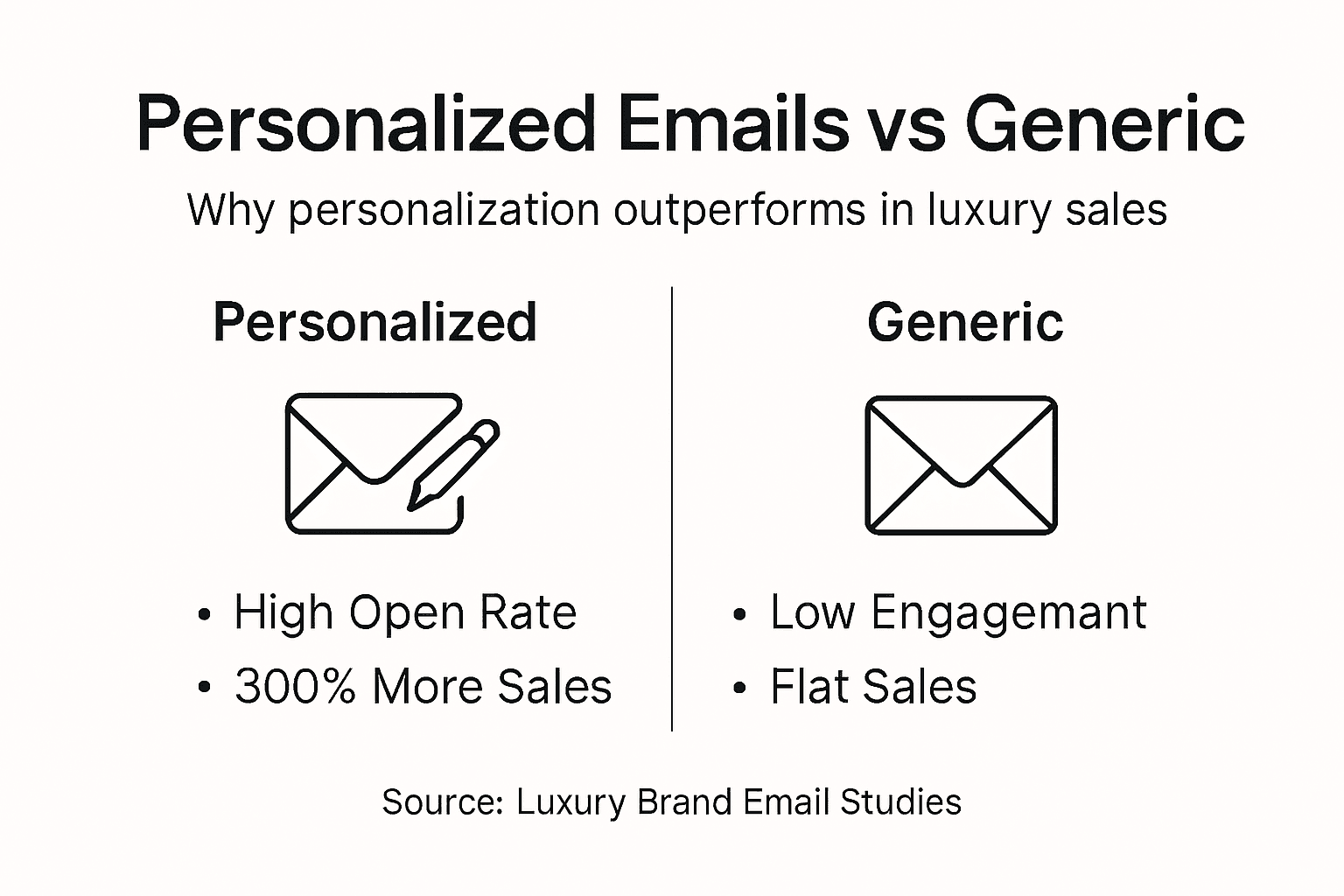
The conversion rate difference between personalized lifecycle emails and generic broadcasts often exceeds 300% in luxury categories. This gap exists because lifecycle emails arrive when customers are actively considering a purchase, while batch emails interrupt without context. Understanding luxury email campaign ROI benchmarks helps establish realistic performance expectations and identify optimization opportunities.
Why Personalization Matters More in Luxury than in Mass Market
Luxury consumers expect brands to remember them. Not just their name, but their preferences, previous purchases, and the specific aspects of your brand that attracted them initially. Emails with personalized subject lines generate 50% higher open rates among affluent luxury consumers, but true personalization extends far beyond inserting a first name in the greeting.
Authentic personalization in luxury email marketing requires three components:
- Behavioral data integration that tracks browsing patterns, product interactions, and content engagement across all channels
- Preference signals captured through explicit feedback and implied through action, including style preferences and price sensitivity
- Purchase history analysis that identifies collection patterns, upgrade cycles, and gift-giving behavior
Mass market brands can succeed with superficial personalization because purchase decisions happen quickly and emotional stakes remain low. Luxury purchases involve extended consideration periods, multiple touchpoints, and significant financial commitment. Your email content must reflect this reality.
"The most effective luxury email campaigns feel like correspondence from a knowledgeable advisor who understands both the product category and the individual customer's situation. They educate, they inspire, and they make relevant recommendations without pressuring."
Consider how premium luxury email marketing strategies differ from conventional approaches. Rather than promoting discounts, they highlight craftsmanship stories. Instead of urgency tactics, they offer exclusive access. Where mass market emails push transactions, luxury emails build relationships that generate transactions as a natural outcome.
Pro Tip: Create content tiers based on customer lifetime value. Your highest-value customers should receive emails that feel individually curated, even when automated. This might mean separate content calendars for different customer segments rather than one-size-fits-all campaigns.
The lifestyle alignment component matters enormously. A customer who purchased a diving watch likely has different interests than someone who bought a dress watch. Your email content should reflect these distinctions, recommending complementary products and sharing relevant stories about craftsmanship, heritage, or product development.
Common Misconceptions About Email Marketing in Luxury Sectors
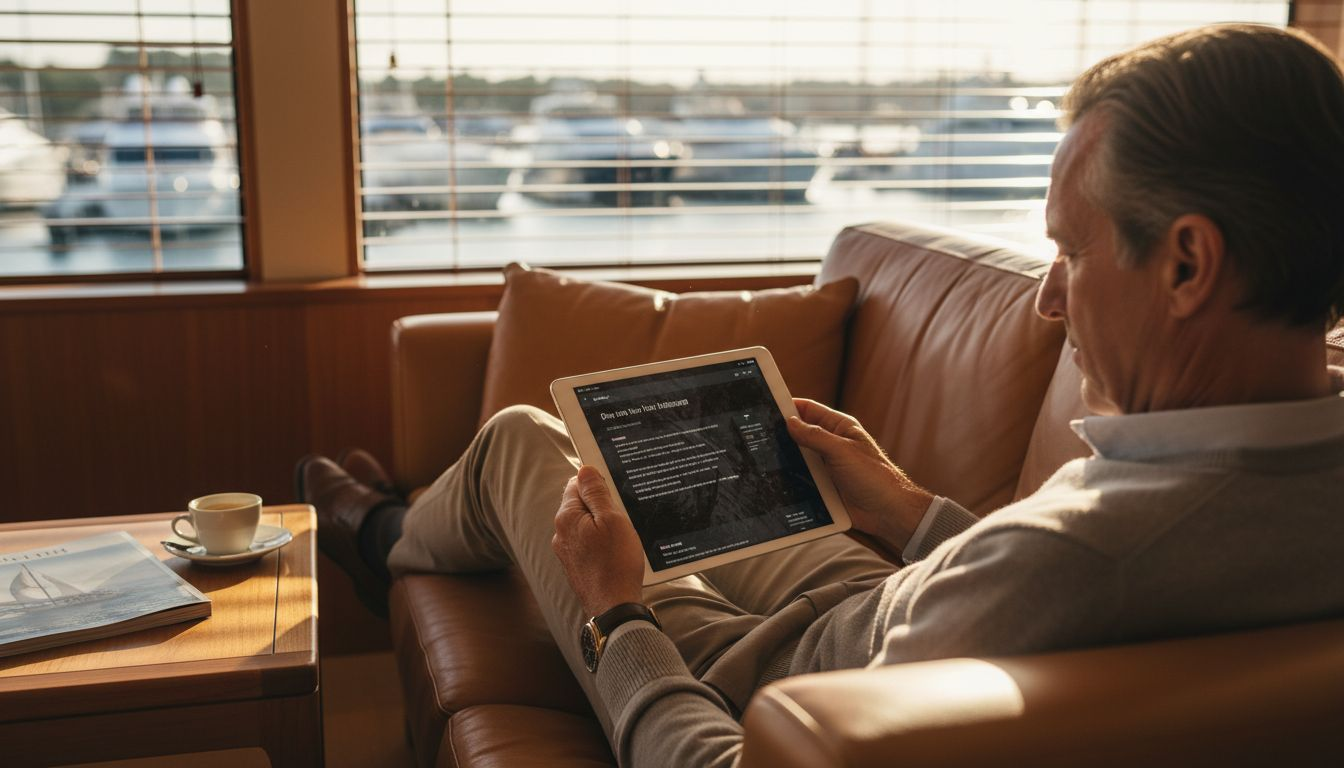
Several persistent myths prevent luxury brands from capturing email marketing's full potential. The most damaging: that email marketing itself is outdated or inappropriate for premium brands. The evidence contradicts this belief entirely, but execution quality determines whether email strengthens or weakens your brand position.
Luxury email marketing campaigns that overuse discounts or mass promotions damage brand equity and reduce customer lifetime value. This fact leads some marketers to conclude that email itself is the problem. The actual issue is treating luxury email like retail email.
Common mistakes that undermine luxury email performance:
- Sending the same promotional calendar to everyone on your list regardless of engagement history or purchase behavior
- Using discount-driven subject lines that train customers to wait for sales rather than valuing craftsmanship
- Over-automating to the point where emails feel generic and impersonal despite technically including personalization tokens
- Neglecting mobile optimization even though luxury consumers check email primarily on smartphones
- Failing to integrate email strategy with paid media, creating disconnected customer experiences
Another misconception holds that personalization simply means using the recipient's name. Real personalization draws on behavioral data, purchase history, and expressed preferences to deliver content that feels specifically curated for each recipient. The difference between "Dear John" and understanding John's interest in vintage chronographs determines whether your email generates revenue or gets deleted.
Some luxury marketers believe email should stand alone as a channel, separate from paid advertising strategy. This approach creates messaging inconsistencies and wastes the customer intelligence generated by both channels. When someone clicks a Facebook ad about a specific watch collection, your email welcome sequence should acknowledge and build on that interest rather than starting from zero. Avoiding luxury email marketing pitfalls requires understanding how channels intersect in customer journeys.
The belief that automation reduces quality represents another limiting assumption. Properly configured automation enables the kind of timely, relevant communication that manual sending cannot achieve at scale. The key is ensuring automated emails maintain the brand voice and content quality customers expect from your luxury brand.
Synergy Between Paid Advertising and Email Marketing for Sustainable Growth
Most agencies manage paid media and email as separate services delivered by different teams using different metrics. This organizational structure creates strategic disconnects that become increasingly expensive as brands scale. The direct integration of paid media insight with email marketing strategy results in more stable performance and more predictable revenue growth for luxury brands.
Integration works in both directions. Paid media generates awareness and drives list growth, while email nurtures relationships and generates repeat purchases at much lower cost than paid acquisition. When these channels operate in isolation, you lose the compounding benefits of coordinated messaging and unified customer data.
Consider the performance differences:
| Approach | Customer Acquisition Cost | Repeat Purchase Rate | Revenue Stability | Brand Consistency |
|---|---|---|---|---|
| Isolated Channels | Higher, increasing with scale | 15-20% average | Volatile, dependent on ad spend | Inconsistent messaging |
| Integrated Strategy | Lower, stabilizes with scale | 35-45% average | Predictable, less ad-dependent | Unified brand experience |
The data advantage of integration is substantial. When your email team knows which paid campaigns drove specific subscribers, they can tailor welcome sequences and ongoing content to match the interests that prompted the initial opt-in. When your paid team understands email engagement patterns, they can refine audience targeting and creative strategy based on what resonates post-click.
Pro Tip: Create a unified customer data model that tracks the full journey from first paid impression through email engagement and eventual purchase. This visibility enables attribution accuracy and strategic optimization impossible when channels operate separately.
For luxury brands specifically, integration protects brand equity while scaling revenue. The customer introduced to your brand through a carefully crafted Instagram ad expects email communication that maintains the same tone, aesthetic, and value proposition. Disconnected strategies create jarring transitions that reduce conversion rates and damage brand perception.
Horologikal's approach exemplifies this integration, managing paid advertising and email under one coordinated strategy. This structure ensures messaging consistency, data sharing, and strategic alignment that amplify performance across both channels. The result is growth that strengthens rather than dilutes brand positioning.
Applying Email Marketing Strategies to Luxury Watch and Jewelry Brands
Strategy matters little without execution. Luxury brands need specific, actionable tactics that respect the category's unique characteristics while delivering measurable revenue growth. Implementation begins with segmentation that goes beyond basic demographics.
A segmentation approach that incorporates browsing behavior, purchase history, and geographic data improves email engagement for luxury jewelry brands. Effective segments might include first-time luxury buyers, established collectors, gift purchasers, and dormant customers with significant past purchase value.
Practical implementation tactics:
- Build welcome sequences that establish brand heritage within the first three emails, focusing on craftsmanship stories rather than immediate conversion pressure
- Configure browse abandonment flows that trigger based on specific product categories, sending content that educates about materials, movements, or design philosophy
- Create VIP reactivation campaigns offering private appointments, early access to new releases, or personalized consultations with product specialists
- Implement post-purchase sequences that deepen product appreciation through care instructions, brand history, and complementary product recommendations
- Design anniversary emails acknowledging purchase milestones with personalized messages that strengthen emotional connection to the brand
Mobile optimization cannot be treated as an afterthought. Luxury consumers check email on smartphones constantly, and poorly formatted emails signal lack of attention to detail. Your email design should reflect the same aesthetic standards as your product photography and website experience.
Content quality determines whether sophisticated segmentation and lifecycle strategy actually generate results. Every email should offer value beyond a sales pitch:
| Email Type | Primary Value | Secondary Goal | Example Content |
|---|---|---|---|
| Educational | Product knowledge | Build purchase confidence | Movement technology explained |
| Inspirational | Lifestyle aspiration | Associate brand with desired identity | Customer stories, heritage features |
| Exclusive | Access to scarcity | Create urgency without discounting | Limited editions, private viewings |
| Consultative | Personalized guidance | Position as expert advisor | Style recommendations, care tips |
The concierge approach works particularly well in luxury email. Rather than promoting products directly, position your emails as helpful guidance from an expert who understands both the product category and the customer's specific situation. This might mean recommending a less expensive piece that better matches stated preferences rather than pushing the highest-margin item.
Understanding luxury email segmentation techniques enables increasingly sophisticated targeting as your program matures and data accumulates. Start with basic behavioral segments, then refine based on engagement patterns and purchase data.
Discover Horologikal's Luxury Email Marketing Solutions
Implementing these strategies requires specialized expertise in luxury marketing combined with technical email platform knowledge. Horologikal works exclusively with watch brands, jewelry companies, and other high-consideration luxury businesses, managing paid advertising and email marketing under one coordinated strategy.
Since 2019, our team has generated more than $25,000,000 in additional revenue for brands selling products where purchase decisions require time, confidence, and evaluation. We focus on revenue growth that protects brand equity rather than quick wins that erode positioning. Our integrated approach ensures messaging consistency from first paid impression through ongoing email relationship, creating the stable performance and predictable growth that enables confident scaling.
If you are an established luxury brand ready to enhance revenue through disciplined email marketing coordinated with paid media strategy, explore Horologikal's email campaign optimization services to discover how integrated channel management delivers commercially sustainable growth.
Frequently Asked Questions About Email Marketing for Luxury Brands
What is the ideal frequency for luxury email campaigns?
Send 2-4 emails monthly to your full list, with additional targeted messages to specific segments based on behavior. Quality and relevance matter more than frequency. Monitor engagement metrics closely, reducing frequency for subscribers showing signs of fatigue.
How should luxury brands measure email marketing success?
Focus on revenue per email, customer lifetime value impact, and repeat purchase rate rather than vanity metrics like open rates alone. Track how email contributes to overall customer journey value, including assisted conversions from other channels. Measure brand perception through engagement quality, not just quantity.
What role does storytelling play in luxury email content?
Storytelling transforms product features into emotional connections that justify premium pricing. Heritage, craftsmanship, and design philosophy stories build brand equity while educating customers. Effective luxury emails balance aspiration with information, helping customers feel confident in their purchase decisions.
How can luxury brands segment their email lists effectively?
Start with purchase history and browsing behavior, then add engagement level and customer lifetime value. Create segments for new subscribers, active browsers, recent purchasers, VIP customers, and dormant high-value customers. Refine segments continuously based on which groupings show meaningfully different response patterns.
Why is mobile optimization critical for luxury email marketing?
Over 70% of luxury consumers check email primarily on smartphones, and poorly formatted emails signal carelessness inconsistent with premium positioning. Mobile optimization ensures your brand presentation meets customer expectations across all devices. Test every email on multiple screen sizes before sending.